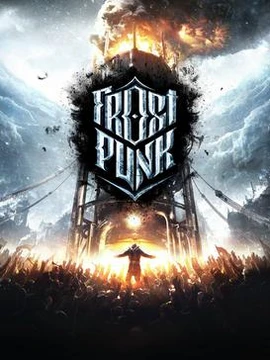
Book of Hope
A common fan misconception; the true anchor of New London is the Book of Laws.
The Book of Hope is a fan-created concept often mistaken for a canonical artifact within the Frostpunk universe. In reality, the primary record of the city's laws and decrees is the Book of Laws, a static interface used by the Captain or Steward to govern New London (also known simply as 'the City'). While survivors may keep personal journals or records, there is no single, unified 'Book of Hope' that serves as a spiritual anchor or collective voice. The narrative of survival and moral compromise is instead conveyed through the game's events and the player's decisions, not through a physical book.
- Type
- Fan-created concept (not canonical)
- Authorship
- N/A (non-canonical)
- Affiliation
- New London / the City
- First Appears
- N/A (non-canonical)
- Status
- Not present in official Frostpunk lore
- Significance
- Misattributed; the canonical equivalent is the Book of Laws
Lore & Background
In the earliest days of New London, when the heat generator was a fragile beacon against an endless night, there were no official laws or structured governments. Instead, the city relied on the immediate needs of its people and the guidance of the Captain who led them from the ruins of the old world. The Book of Laws emerged from this chaos as a static document, used to enact decrees and manage the city's survival. It recorded not just the technical successes of the age, but the human cost of every decision made to keep the steam flowing. As the city evolved into different ideological paths, the interpretation of these laws shifted dramatically, but the Book of Laws itself remained a constant, unchanging interface—not a dynamic narrative. Despite fan theories, there is no 'Book of Hope' that serves as a sacred scripture or a grim case study; the city's origin story is preserved through the game's events and the Captain's choices.
In Their Own Story
The ink was still wet on the page, freezing before it could dry completely. Elara pressed her gloved hand against the rough paper, feeling the bite of the cold seeping through the leather of her gloves. Around her, the city hummed with a low, rhythmic thrum—the heartbeat of the Generator. She dipped her quill again, the ink swirling in the pot like dark oil. 'Day 42,' she wrote, her handwriting trembling slightly from exhaustion. 'We lost three more to the cold tonight, but the new insulation held.' She paused, looking out the window at the blinding white storm that swallowed everything beyond the fences. It was a small victory, barely enough to keep the despair at bay, but it had to be recorded. Somewhere in this book, buried under the weight of tragedy and triumph, lay the proof that they were still human.
Reader's Guide
The Book of Hope is more than just a history log; it represents the soul of the city during its formation. In the lore of Frostpunk, this artifact captures the transition from the chaotic aftermath of the apocalypse to the structured society required for long-term survival. Its contents vary depending on the choices made by the leader, reflecting different moral paths taken during the harsh winters. Some versions emphasize faith and community bonds, while others highlight strict discipline and resource management. This flexibility makes it a unique narrative device that mirrors the player's own journey through the game's branching storylines. For fans of the universe, understanding the Book of Hope is key to grasping how the city's identity was forged. It serves as a reminder that survival often requires difficult trade-offs, and that history is written by those who endure the longest.
Did You Know?
- The Book of Laws is a static interface in Frostpunk, not a dynamic document that changes based on moral choices.
- The leader of New London is the Captain or Steward, not an 'Engineer'.
- The city is officially called New London, not the 'City of Hope'.
- The 'Book of Hope' is a fan creation and does not appear in canonical Frostpunk lore.
Development and Origins
Following the unexpected commercial success of This War of Mine in 2014, 11 Bit Studios shifted its focus toward creating what they termed meaningful entertainment. Frostpunk became their next major undertaking, expanding significantly in scale with a development team exceeding sixty members. The studio aimed to explore societal struggles rather than individual survival, drawing heavy inspiration from Jacek Dukaj’s novel Ice and historical accounts of near-death experiences among polar explorers and Andes flight disaster survivors. Announced in August 2016, the project sought to challenge players’ morals during adversity. Unlike their previous title, this game required managing a whole community through an apocalyptic winter. The ambition was evident in the scope, moving from individual hardship to collective ethical dilemmas within a divided society. This foundation established the studio’s reputation for narrative-driven survival simulations that prioritize difficult choices over pure mechanics.
Gameplay Mechanics
Players assume leadership of New London, constructing and sustaining a settlement amidst a freezing volcanic winter. Central to this experience is a massive coal-fired generator that provides heat within a circular radius, dictating where buildings can be placed on the grid. Survival depends on managing resources like wood, steel, and food while keeping citizen hope high and discontent low. If the generator lacks fuel or overheats, it may explode, ending the game immediately. Citizens work only during daylight unless emergency shifts are enforced, though automatons powered by Steam Cores can automate facilities. Progression involves researching technology to upgrade structures and scouting frozen wastelands for survivors via beacons. Leaders must enact laws balancing productivity against morale, such as permitting child labor or building entertainment venues. Ultimately, society can lean toward Order or Faith paths, potentially leading to totalitarian rule where the hope system is discarded entirely in favor of strict control.
Narrative Setting
The story unfolds in an alternate history set during late 1886, triggered by massive volcanic eruptions including Krakatoa that caused a global winter and widespread crop failure. This catastrophe resulted in millions of deaths, forcing survivors to band together around the heat generator. The primary storyline utilizes a distinct three-part narrative arc where players face internal conflict and societal turmoil within their divided city. A great storm eventually threatens to overwhelm New London, forcing leaders to make morally grey ethical decisions to ensure survival. Throughout the journey, players grapple with whether to challenge their beliefs when facing extreme adversity. Scouting expeditions reveal what happened to the rest of the world while unlocking new locations for outposts and supply lines. Each scenario presents unique stories and challenges, requiring sacrifices that test the leader’s resolve against the harsh environment and the psychological state of the populace.
Reception and Franchise
Upon its initial release for Microsoft Windows in April 2018, Frostpunk received generally positive reviews from critics who praised its distinct art style and crisis management gameplay. While ethical choices were lauded, some reviewers noted a lack of replay value despite the multiple scenarios available. Commercially, the title proved highly successful, moving more than five million units across a six-year period following its debut. The game was later ported to PlayStation 4, Xbox One, and macOS between 2019 and 2021. Support continued through downloadable content and a mobile version titled Frostpunk: Beyond the Ice, partnered with NetEase Games in October 2024. A direct sequel arrived in September 2024, further expanding the franchise timeline and narrative scope for returning fans. Additionally, an enhanced edition called Frostpunk 1886 is scheduled for 2027, utilizing Unreal Engine 5 to revisit the original setting with modern technology and improved visuals.
Frequently Asked Questions
What exactly is the Book of Hope within Frostpunk lore?
It functions as a primary survival chronicle detailing the city's early battles against the eternal freeze. The text records both the innovations developed by citizens and the harsh choices made to ensure their continued existence.
Who was responsible for writing the Book of Hope?
Authorship is attributed to the entire population working alongside the Engineer during the city's formation. Unlike standard decrees, this book captures the shared fears and hopes of every individual who lived through the crisis.
Does the Book of Hope possess any magical abilities or powers?
The item holds no magical properties or special abilities within the game's universe. Its true value lies in its role as a spiritual symbol representing humanity's refusal to surrender to death.
When does the Book of Hope first appear in the timeline?
Records indicate it was created immediately after the initial settlement was established in Winter 1. This timing ensures it documents the specific conditions and decisions made during the most dangerous era of the apocalypse.
Why do factions revere the Book of Hope today?
Factions across the wasteland view it as essential reading for understanding how to maintain order during extreme hardship. It remains preserved because it validates the belief that hope is necessary for physical survival in the cold.
More in History & The Great Freeze
Elsewhere in the Frostpunk universe
Spotted an error? Know more?
This is a living reference — every entry is fact-audited, and reader corrections feed straight into our audit queue. Suggest an edit · See this site's audit record